EDITION WANDELWEISER RECORDS
> CD catalogue
_____________________________________________________________________
<< >>
emmanuelle waeckerlé
what is left if we aren't the world
| order
reference: medium: composer: performer: |
EWR
2602 CD emmanuelle waeckerlé wandelweiser ensemble (amsterdam/düsseldorf), 6daEXit improvisation ensemble (thessaloniki), bouche bée: petri huurinainen, peter keserue, emmanuelle waeckerlé (london) |
| |
|
|
 |
emmanuelle waeckerlé what is left if we aren't the world 01 what is left in amsterdam, 29.10.2022 17’14” wandelweiser ensemble: antoine beuger (voice), dante boon (piano), joep dorren (voice, accordion), michel duijves (bass clarinet), ju?rg frey (melodica), rene holtkamp (guitar), eva-maria houben (organ), marcus kaiser (cello), bin li (xun), christoph nicolaus (stone harp), rasha ragab (percussive objects), sylvia alexandra schimag (voice), germaine sijstermans (bass clarinet), sytske van der ster (voice), sophie stone (clarinet), samuel vriezen (voice, jaw harp), emmanuelle waeckerle? (voice) 02 what is left in düsseldorf, 14.07.2023 21’48” wandelweiser ensemble: maureen wolloshin (oboe), kevin leomo (recorder), ryan dohoney (voice, percussion), gregor forbes (vio- lin), maikel (violin, voice), levin zimmermann (e-bow, electric guitar), jukka-pekka kervinen (ewi e-flute), eva-maria houben (mono- chord, harmonium, piano), antoine beuger (flute), emmanuelle waeckerle? (voice), fjodor gladilin (acoustic guitar), steven vinkenoog (electric guitar), frederique donche (pitch pipe), samuel vriezen (piano), angeles rojas (piano,violin) 03 what is left in thessaloniki, 18.05.2025 13’47” 6daEXIt improvisation ensemble: ioannis dimitroudis (synthesizer), yorgos holopoulos (computer-based electronics, voice), prodro- mos koukos (snare drum), lina koukouli (melodica, voice), fotis lazidis (electric guitar, pedals), alexandros ntouzas (electric guitar, pedals, voice), josephine papalamprou (electric bass), chrysi parpara (accordion), alexis porfiriadis (synthesizer), ioanna valsamara (voice) 04 what is left in thornton heath, 23.10.2022 18’05” bouche be?e: petri huurinainen (acoustic guitar, bow, ebow, fx pedals), peter keserue (samples, ipads, melodica, seaboard), emma- nuelle waeckerle? (voice) audio excerpt: ► 01 (17:14) 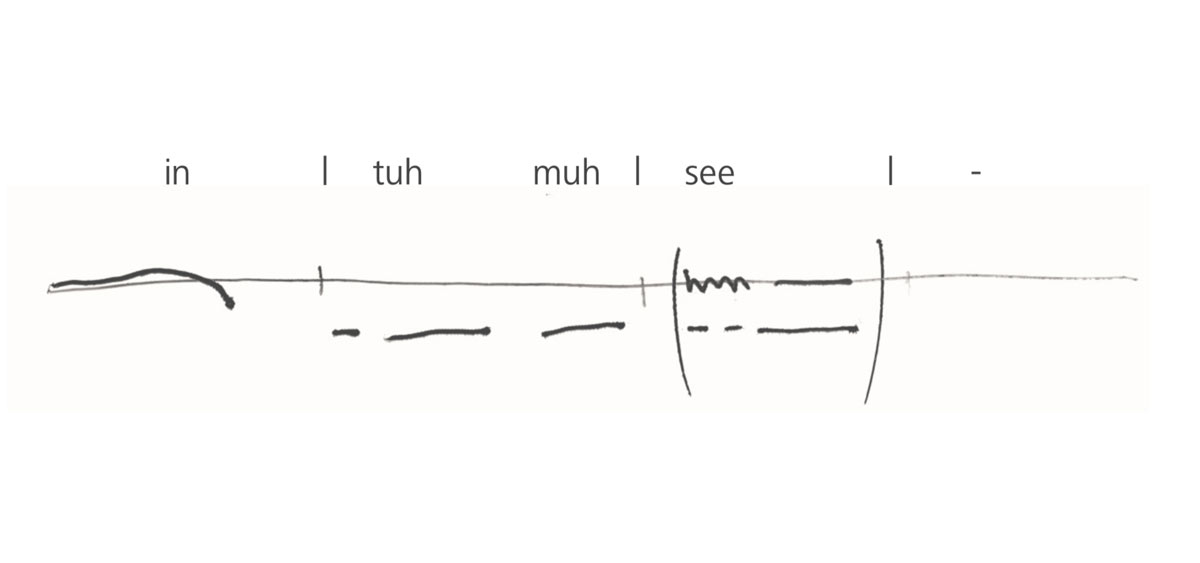 what is left if we aren’t the world? emmanuelle waeckerle?’s piece is a placeholder, a holding place, holding space. a way to respond to the alarming and sudden cessation of social life during the pandemic—whether that was experienced as ending, as interlude, or as a kind of new beginning. the piece has its origin in a recording of emmanuelle’s voice and the wind on a stormy night in lock- down: the voice alone, but not alone, the wind its own kind of breath, one that doesn’t need a body to breathe through, to keep going or to preserve. what is left, the ensemble piece that emerged from this, is a way of collectivizing that aloneness. from i to we, always asking who “we” are; who is allowed to be “we”. a year after the premiere in amsterdam, the piece was performed five times at the jazz-schmiede, du?sseldorf, as part of the long-running wandelweiser gathering, KLANGRAUM. lines were blurred between rehearsal, performance, and composition. whatever their role in a particular piece, everyone is a listener, with listening a shared activity orienting us to each other and towards the world. the piece was workshopped: not as a precursor to something finished, but as part of an ongoing process, in which the discussions that surrounded the piece—how to perform it, what it means— are just as much a part of the piece as its score or a performance of that score. what is left if begins with “pandemonium”, an explosion of sound which can be alternately joyous, explosive, or wracked, gradually fading out into a silence in which musicians and environment merge. composed during covid, it indexes that desolate time, but also the ways in which chaos continues to form the underlying, unstable ground of our equally uncertain present. this kind of collective catharsis is a space for grief as well as rage, and for the networked, swarm intelligence of collective sound-making occurring within the framework of a social relation of mutual attention and care. to go beyond ourselves whilst also digging deep into those parts of ourselves that we’ve forced ourselves to suppress, in order to go on: those huge griefs that, during the pandemic, we lived with and then had to force ourselves to forget; the ongoing griefs of the catastrophes we’re living through now, five years on. i’m struck by the instruction in the score: “pandemonium [...], but not an apocalypse”. because the idea that everything has ended is perhaps too easy, even as the possibility of planetary extinction becomes more and more palpable. how do we cope with an end that is not an end? how do we go on? the score opens at the moment when one doesn’t quite believe what’s happened and continues into the moment where we try to hold onto the beliefs that sustained us up to this point, and to integrate—or to refuse to integrate—the new knowledge that trauma brings. “finding ourselves inside of something.” finding something inside of ourselves. keeping moving. within these sounds we hear the reflection of the horrors of where we are, all the things that block us truly being together—the anxieties, the cruelties, the hierarchies, the pettiness, the violence, the mistrust, the fear. but we also hear the possibility of what it would mean to be together, truly, glimpsed, briefly: a fraction of a second, a sliver of a sound. both the self and the tutti fall apart. and this is where we have to start. for after we figure out what’s left, the question is, as emmanuelle says, “what to do? david grundy, 2025
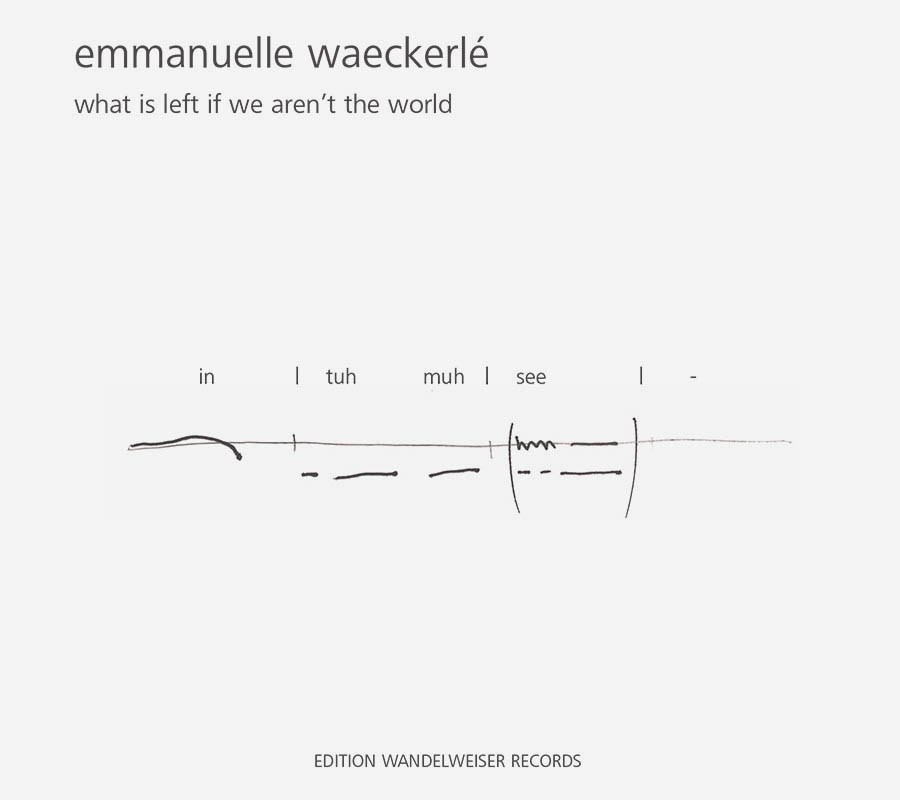
intimacy—a politics? what sort of world does emmanuelle’s text score invite us to invent? we begin by sounding out syllabically "in-tuh-muh- see," feeling its shape the contours of our mouth. we taste and see, wondering about the possibility of achievement. for intimacy does not preexist but comes into being through resonance. and what did we achieve in KLANGRAUM in 2023? pandemonium, yes, "but not an apocalypse." much depends upon that distinction, *pan-daemones*—a multi- tude of guiding spirits are brought forth as we make a joyful noise. without apocalypse, we need no revelation for we are ourselves that revelation. we are the "pan-," the "all." as plotinus writes in “on our allotted daemon,” we become daemons (our own guiding spirit) when we are one. oneness we find when we become intimate with ourselves and others. i am willfully engaging in some playful etymology, but it is the spirit of emmanuelle's work to play with and achieve such oneness: she writes, we play "until we feel or sound indistinguishable from what is there, finding ourselves inside of something." but what is that something, and what is the proper genre for that oneness amidst (what robert ashley called) "the-approach-of-the-end-of-the-world-feeling"? in emmanuelle's work, pandemonium rises to the level of what lauren berlant might have called a "crisis genre", a particular dispensation of form that give shape to our historical present. crisis genres enact a preliminary judgement about just what it is that is going on. emmanuelle's pandemonium contrasts with berlant's focus on the historical novel as well as hannah arendt's identification of lament as the crisis genre par excellence. given the affective contrast between moods of pandemonium and lament we might imagine them to work at cross purposes—that is the chaos (controlled as it is in what is left ...) does not do justice to the work of lamentation. but we might see both these genres as doing the work of rebuilding intimacy, of inviting reconciliation. our encounter with pandemonium—our manufacturing of it—asks us to sit with the question of “can i be with this as it is?” arendt certainly was confronted with this question more than most as she was displaced, interned, exiled, and estranged from the german culture that had been her entire world. her refrain as a thinker was constantly how can i continue to love the world as it is revealed to me? put otherwise, she wondered how she could be in solidarity with things as they are. through the musical politics of what is left ..., those who took part were confronted with the ques- tion of how we could create solidarity after the end. through our recurring work through what is left ... we invented forms of intimacy from our pandemonium, a pandemonium that was at the same time a lament. returning to plotinus, we must make ourselves realize that this "after the end" might return us to the beginning wherein we are always already one, but to feel that requires constant attention that recognizes our grief as the pathos of our connection, and our joyful noise as celebration of it. ryan dohoney, 2025
|